

Why Tantra?
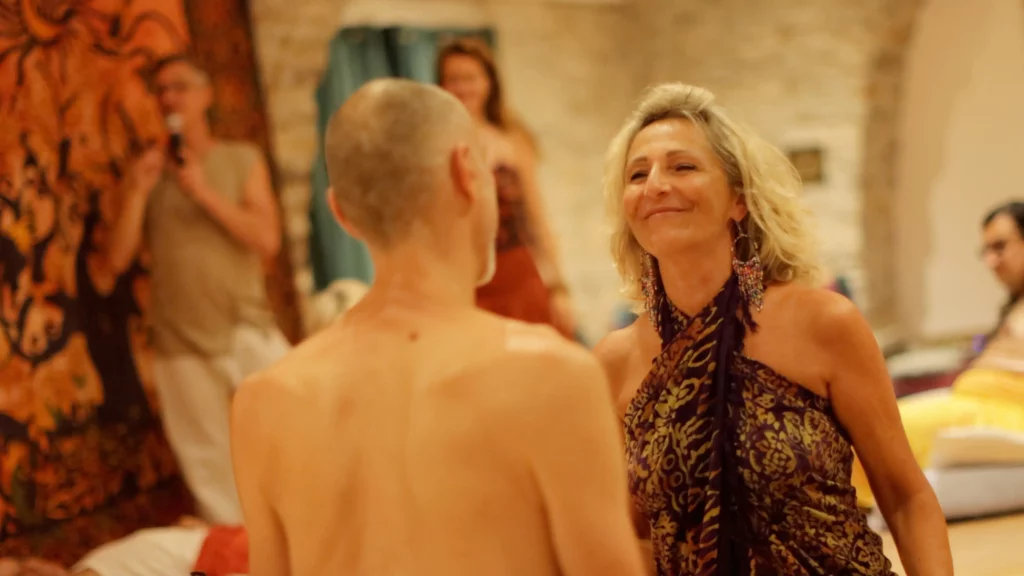
An ancestral practice originating in India, Tantra is a spiritual path that aims for the unity of body, mind and universe. Often misunderstood, it goes beyond simple notions of sexuality to offer a profound philosophy for reaching a higher state of consciousness. Through meditation, yoga and other techniques, Tantra invites inner transformation and authentic connection with oneself. In this article, discover the true meaning of tantra, its origins, its benefits and how you can become initiated into this age-old tradition.
"For us, Tantra allows us to explore directly who we are in all our facets (body-soul-spirit-energy). The invitation is to return to oneself, to one's deepest essence, to the meaning of life, beyond the mind and the conditioning of one's upbringing and our society, which prevent us from being fully fulfilled and in harmony with existence. This path enables us to unfold our full potential and opens us up to the love of our true essence. For us, Tantric practice is about transformation through Love, to emerge from the illusion of separation and taste the state of Oneness".
Sabryna & ShivaChris

What is a
THE TANTRA
Definition and meaning of tantra
The term "tantra", derived from Sanskrit, means "weaving" or "weft" and refers to a profound spiritual tradition. Tantra is a philosophical path aimed at spiritual integration and the awakening of universal consciousness. Valuing the union of the masculine and feminine, this tantric philosophy encourages personal transformation through vital energy. Considered a spiritual path, Tantra seeks to achieve a heightened state of consciousness and the realization of universal truth. This age-old practice offers a holistic approach to spirituality, fostering union with oneself and the universe as a whole.
The fundamental principles of Tantra
Tantra is based on fundamental principles aimed at uniting body and mind for integral transformation. At the heart of this Tantric philosophy, vital energy, or shakti, flows through the body, linking the masculine and feminine in universal harmony. The practice of Tantra combines meditation, yoga and kundalini yoga to raise the level of consciousness and promote spiritual awakening. Through self-mastery and breath control, a state of total presence is achieved. Sexual energy is considered sacred, integrated into a tantric sexuality that contributes to spiritual integration.
What are the origins
FROM TANTRA
The historical roots of Tantra in India
The tantric tradition has existed for millennia, in oral form: passed down from generation to generation by yoginis and dakinis. The historical roots of Tantra in India go back to the VIIᵉ century, when it appeared within Hinduism and Buddhism. This tradition, transmitted in Sanskrit by Indian masters and monks, gave rise to Hindu Tantrism and Tantric Buddhism, including Tibetan Buddhism. Between the VIIIᵉ and XIᵉ centuries, traditional tantra and tantric yoga developed, integrating rites and sacred texts focused on shakti, the creative energy. Modern figures such as André Padoux, Daniel Odier and Osho have helped bring this culture and its evolution to the West.
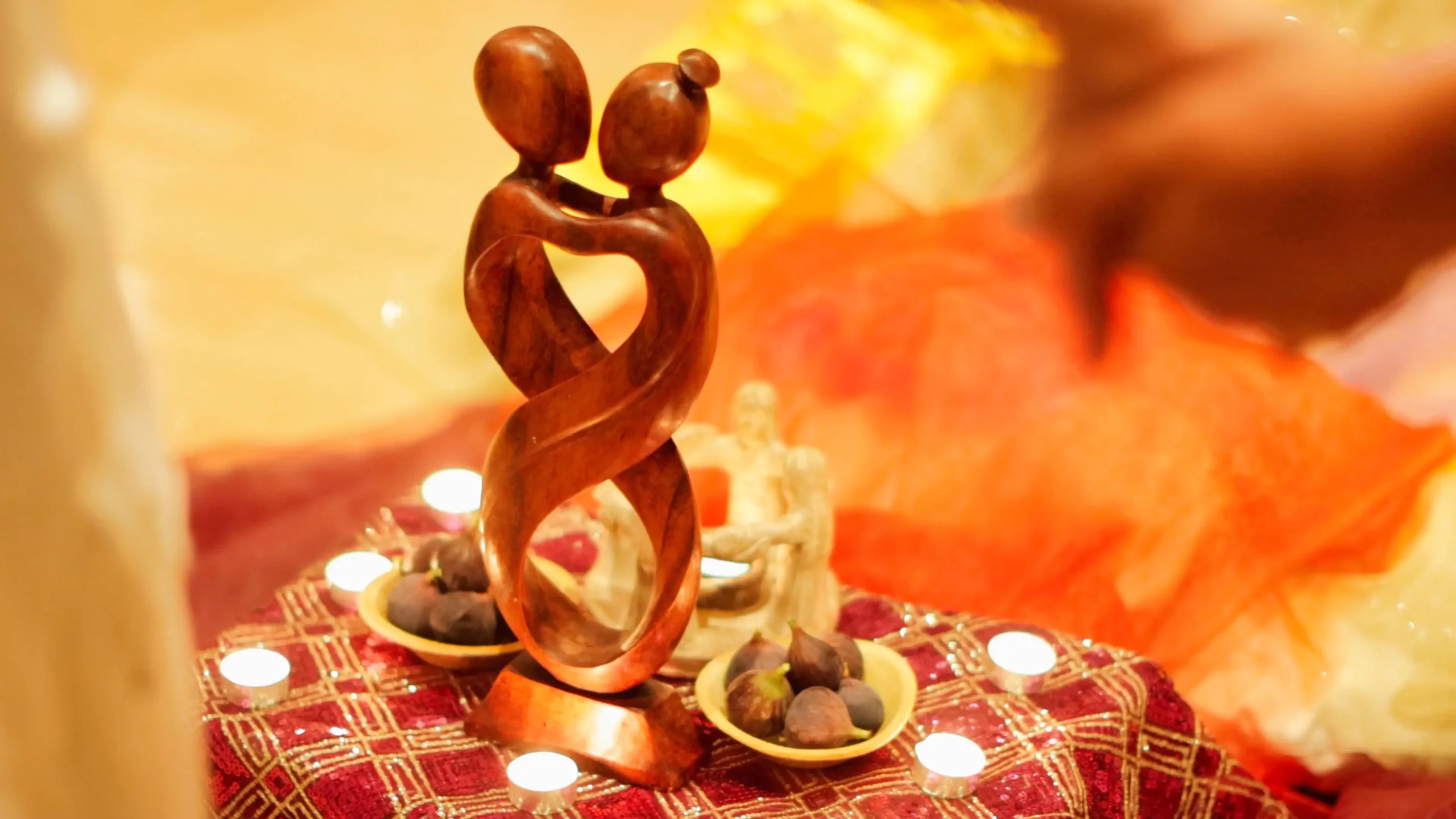
Tantra across cultures
Tantra has crossed the borders of India to spread throughout the world, undergoing adaptations and transformations within different cultures. In the West, the Western perception of Tantra has often been misunderstood, focusing on superficial aspects or distorted by the media. Yet this rich and profound philosophy has influenced the spirituality and practice of Tantra in many Westerners. Cultural exchanges and the teachings of Buddhist masters have led to a gradual integration of Tantra into Western culture, although its traditional essence is sometimes misunderstood or simplified.
What are the benefits
FROM TANTRA
The physical benefits of Tantra
Tantra brings many physical benefits by harmonizing the body and awakening vital and/or sexual energy, which is basically the same thing. Techniques such as kundalini yoga and tantric yoga strengthen the spine and perineum, enhancing vitality and confidence. Tantric massages stimulate the senses and promote deep relaxation, while awakening sexual energy. Tantra practice promotes better breathing and awareness of the physical body, raising the level of consciousness. These sessions provide relaxation, pleasure and well-being, contributing to improved overall health.
Mental and emotional benefits
Tantra offers profound mental and emotional benefits by promoting balance between mind and emotions. Through meditation and introspection, it develops self-awareness and self-mastery, leading to inner transformation. The practice encourages mindfulness and spiritual awakening, bringing inner peace, serenity and mental well-being. By cultivating love, harmony and self-confidence, Tantra helps to establish more authentic relationships and positive attitudes. In this way, it helps to anchor a clear, balanced vision of life, strengthening emotional intelligence and mental clarity.
The spiritual benefits of Tantra
Tantra brings profound spiritual benefits by promoting spiritual awakening and awareness at a higher level. Through Tantric meditation, one gains access to an expanded state of consciousness, enabling spiritual transformation and connection with the vital energy, or shakti. This practice aims to unite body and mind, leading to inner harmony and peace. By integrating spirituality into one's life, Tantra facilitates the expansion of consciousness, enlightenment and total presence. It is a sacred path to universal truth, beyond the material, to achieve authentic union with the soul.
Good and bad perception
FROM TANTRA

Common misunderstandings about Tantra
Tantra is often misunderstood in the West, where preconceived ideas and stereotypes persist. Many associate Tantra solely with the sexual aspect, creating a skewed image fuelled by the media and misinformation. This Western perception simplifies a sacred spiritual practice rich in love and deep contact. Myths and misinterpretations create confusion about the true essence of tantra, which is a sacred rite aimed at authentic spiritual relationship. It's important to overcome these taboos and recognize the truth behind esoteric representations and codes perceived as mysterious.
The role of the media in the perception of Tantra
The media have a major influence on the Western perception of Tantra, often disseminating preconceived ideas and stereotypes. The portrayal of Tantra in mass communication generally focuses on the sexual aspect, creating a misunderstood image of this spiritual practice. This popularization impacts society by spreading misinformation. Advertising and mass media thus shape a limited point of view, obscuring the true essence of Tantra. It is crucial to change this perception to enable an authentic encounter with this art of living and philosophy.
How to get started
tantrism
Getting started
For beginners to tantra, it's essential to start with simple techniques. Meditation and breathing are key methods for achieving a heightened state of awareness. Kundalini yoga, for example, combines physical exercise and meditation to promote self-mastery and self-awareness. Visualization and concentration help develop the necessary presence and open-mindedness. Participating in a session guided by an experienced teacher can offer valuable instruction. This approach facilitates personal development and boosts confidence, enabling you to get in touch with yourself.
Resources and training
To deepen your understanding of Tantra, a wide range of resources and training courses are available. Courses and workshops led by experienced Indian masters and Western teachers introduce you to the techniques of Tantric practice. Tantric centers offer immersion programs including meditation, tantric yoga and rituals for a complete experience. Reference books by Daniel Odier, André Padoux and Osho, among many others, enrich your knowledge. Online resources also offer courses and guides to facilitate your tantric initiation. Whether you're looking for a tantra training course or a practical guide, the current offer is sure to meet your aspirations.
 English
  Français